

What Is Physical Literacy and Why Does It Matter for Children?
What Is Physical Literacy?
We often talk about children being able to read, write and develop their numeracy skills. But there is another type of literacy that plays an important role in childhood development: physical literacy.
Physical literacy is about developing the skills, confidence, understanding and enjoyment needed to take part in physical activity.
It isn't simply about being good at football, running quickly or being able to catch a ball. It is about helping children become comfortable and capable movers, giving them the confidence to participate in a wide range of activities and sports.
For children, these foundations can influence how they experience PE at school, how willing they are to try new sports and whether they continue being active as they grow.
Why Does Physical Literacy Matter?
Children develop movement skills from a young age. Running, jumping, balancing, throwing, catching and changing direction are all fundamental movements that form the building blocks for more complex sporting skills.
The National Curriculum for PE in England reflects this progression. At Key Stage 1, pupils are expected to develop fundamental movement skills and become increasingly competent and confident, while developing agility, balance and coordination. At Key Stage 2, pupils build on these skills and learn to apply them in different ways and across different activities.
This means that a strong PE programme isn't simply about introducing children to lots of different sports. It should help them develop the underlying movement skills that allow them to participate successfully in those sports.
The Building Blocks of Physical Literacy
Physical literacy involves several different areas of development working together.
1. Fundamental Movement Skills
Fundamental movement skills are the basic movements children use throughout sport and everyday life.
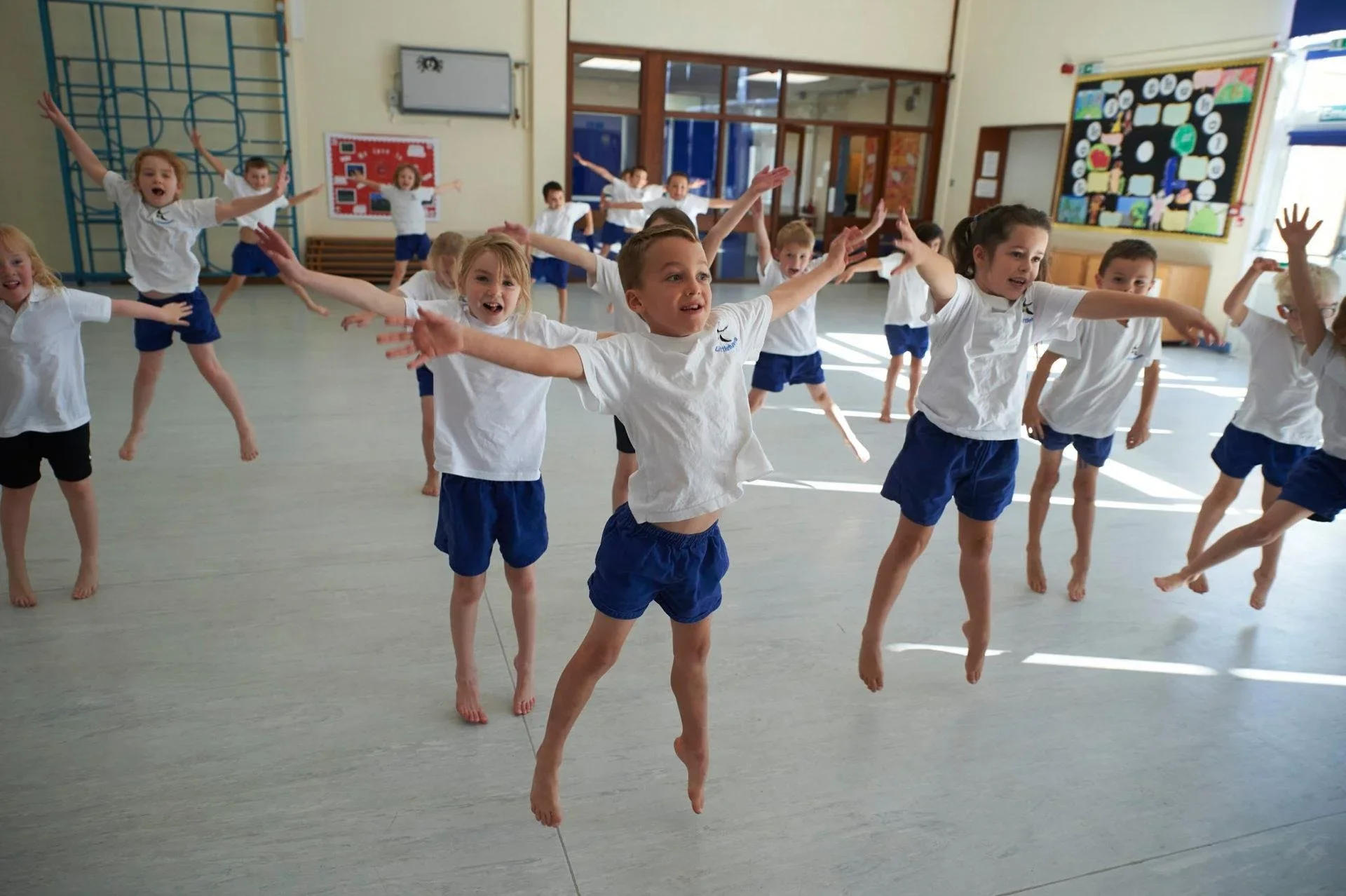
These include:
Running
Jumping
Hopping
Throwing
Catching
Balancing
Changing direction
Dodging
Once children become more comfortable with these movements, they can begin to combine and adapt them for different sports and activities.
For example, throwing and catching skills can be used in cricket, dodgeball, netball and many other activities. Balance and agility can support everything from football to badminton.
2. Coordination
Coordination is the ability to control different parts of the body effectively and make movements work together.
Think about a child learning to hit a badminton shuttlecock. They need to track the shuttle with their eyes, move their body into position, control their racket and make contact at the right moment.
That is much more than simply learning how to hit a shuttlecock. It is developing coordination.
Regular opportunities to practise these skills can help children become more confident when learning new movements and sports.
3. Agility and Balance
Agility is the ability to move and change direction efficiently, while balance helps children control their bodies while stationary and moving.
Both are important across a huge range of activities.
A child might use agility to avoid an opponent in a football game, change direction during a tag activity or move around a badminton court.
Balance might be needed when landing after a jump, changing direction or controlling a movement.
The English PE curriculum specifically highlights agility, balance and coordination as important areas of development during Key Stage 1.
4. Confidence
Physical literacy isn't only physical.
A child might have the physical ability to perform a movement but lack the confidence to try it.
Creating positive experiences is therefore an important part of helping children become physically literate.
When children are encouraged to have a go, make mistakes and try again, they begin to understand that they don't have to be perfect to participate.
That confidence can make a huge difference when they encounter a new sport or activity.
5. Understanding How to Move
Physical literacy also involves children learning to understand movement.
As children progress, they begin to make decisions about how and when to move.
Should they pass or dribble?
Where should they move to receive the ball?
How can they create space?
When should they change direction?
These decisions introduce children to the tactical and problem-solving elements of sport.
This becomes increasingly important as children progress through school. At Key Stage 2, the National Curriculum expects pupils to develop their ability to use skills in different ways, understand how to improve and recognise their own success.
Physical Literacy Isn't About Being "Sporty"
One of the biggest misconceptions about children's sport is that some children are simply "sporty" and others aren't.
Physical literacy challenges that idea.
Children develop at different rates and have different strengths. A child who finds football difficult might excel at badminton. Another might love dance, athletics, swimming or gymnastics.
The goal isn't to make every child a competitive athlete.
It is to give every child the skills and confidence to enjoy movement.
A positive experience can encourage a child who initially says, "I'm not good at sport" to discover an activity they genuinely enjoy.
How Schools Can Support Physical Literacy
Schools play an important role in developing physical literacy because PE provides structured opportunities for children to learn and practise movement skills.
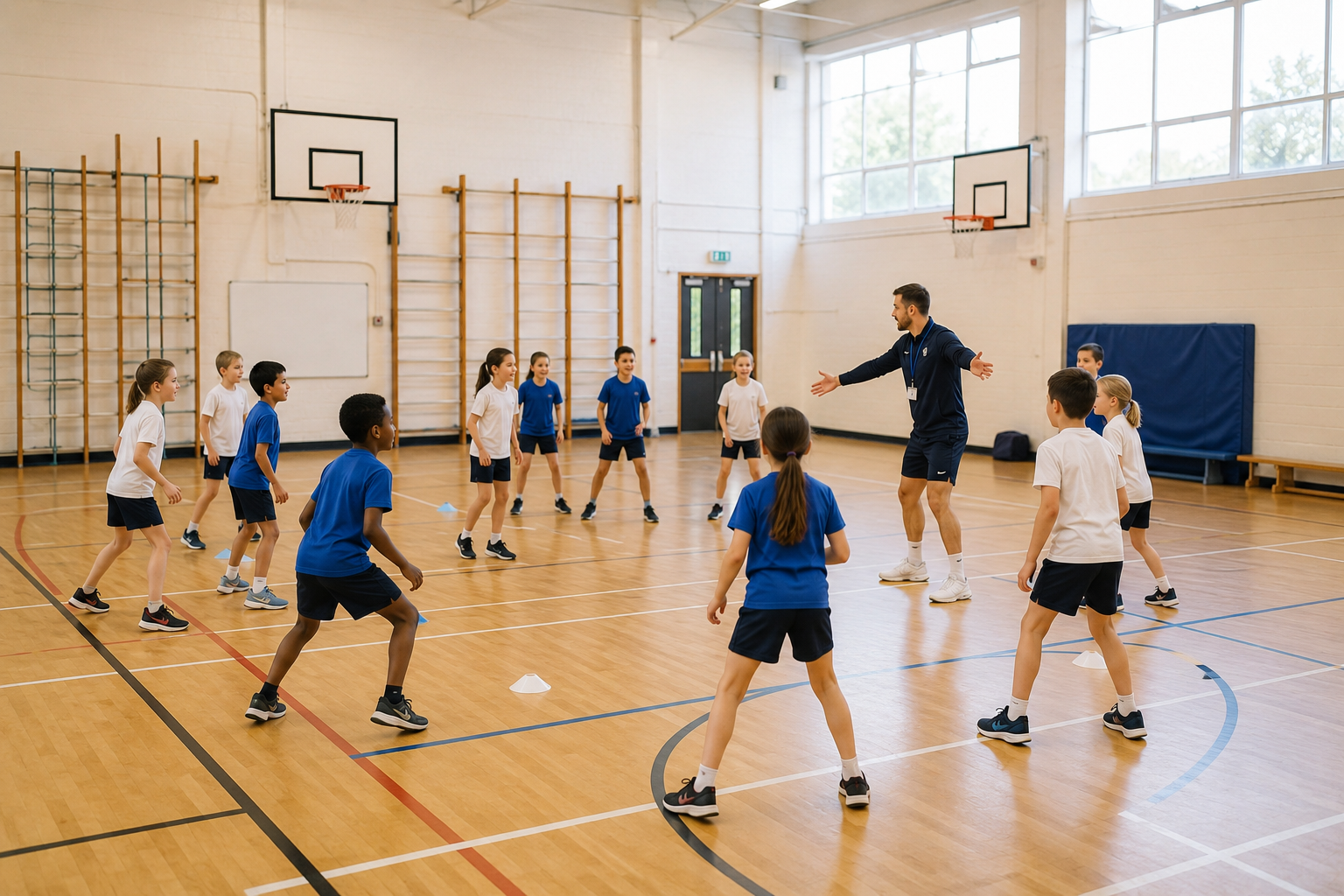
In England, PE is a statutory part of the National Curriculum. At Key Stage 1 and Key Stage 2, pupils are expected to develop physical skills, participate in a range of activities and learn to apply and improve their abilities.
High-quality PE can therefore provide children with more than an opportunity to be active. It can help them build the foundations that allow them to participate confidently in physical activity.
This is particularly important because not every child has the same opportunities to take part in organised sport outside school.
A broad and inclusive PE programme can give children opportunities to experience different activities, discover their strengths and develop skills they can carry into other areas of their lives.
Physical Literacy Goes Beyond PE
Although PE is an important part of developing physical literacy, it doesn't stop when the lesson ends.
Children can develop their movement skills through:
Playground games
Walking and cycling
Dancing
Swimming
Football
Badminton
Athletics
Outdoor play
Community sports clubs
The UK Chief Medical Officers' guidance recommends that children and young people aged 5–18 should aim for an average of at least 60 minutes of physical activity across the day, spread throughout the week. The guidance also highlights benefits including developing coordination, confidence and social skills.
The more opportunities children have to move, experiment and play, the more chances they have to develop these skills.
Why Variety Matters
One of the best ways to develop physical literacy is to give children opportunities to experience different types of movement.
Football might develop kicking, running, spatial awareness and decision-making.
Badminton can challenge hand-eye coordination, reaction time, footwork and balance.
Dodgeball can develop throwing, catching, agility and awareness.
Athletics can help children develop running, jumping and throwing skills.
Each activity provides a different challenge, while the underlying movement skills can transfer from one activity to another.
This is why a broad PE curriculum is so valuable. Rather than expecting children to specialise early, it gives them opportunities to build a wider foundation of physical skills.
Building Skills for Life
Physical literacy isn't about creating the next generation of professional athletes.
It's about helping children become confident, capable and enthusiastic about being active.
A child who learns how to move, understands how their body works and feels confident trying something new is more likely to see physical activity as something they can do and want to do.
At Supreme Sport, we believe children's sport should provide opportunities to develop skills, confidence and a genuine enjoyment of being active.
Whether it's football, badminton, multi-sport activities or PE in school, every session is an opportunity for children to move, learn, challenge themselves and discover what they can do.
Because physical literacy isn't just about learning how to play sport.
It's about giving children the foundations to enjoy movement for life.